The Anancy-ism of the Jamaican Leaf People: Using Art as a form of Escapism
Anancy-ism and the Archive of the Imagined: Folklore as Cultural Resistance in Contemporary Jamaican Visual Practice
By Sabine Coulson
In Jamaican cultural memory, Anancy is more than a character — he is a code. Originating from West African trickster mythology and carried into the Caribbean through the transatlantic slave trade, Anancy stories became a means of survival, offering allegories for cunning, resistance, and transformation. While studying the Euro-American history of Modernism and the forms of knowledge it privileged, I recognized how Caribbean folklore and oral tradition were often excluded from these narratives. In response, I coined the term Anancy-ism — not only to honor Anancy as a cultural symbol, but to propose a methodology that centers storytelling, myth, and resistance as valid and rigorous forms of artistic and curatorial thought.
This writing sample reflects how my work engages with Anancy-ism as a conceptual framework — a counter-archive to modernist ideals — and how that framework grounds my ongoing project, The Anancy-ism of the Jamaican Leaf People: Using Storytelling as a Form of Escapism. The catalogue unfolds in three distinct visual chapters, each representing a stage in both narrative structure and symbolic resistance.
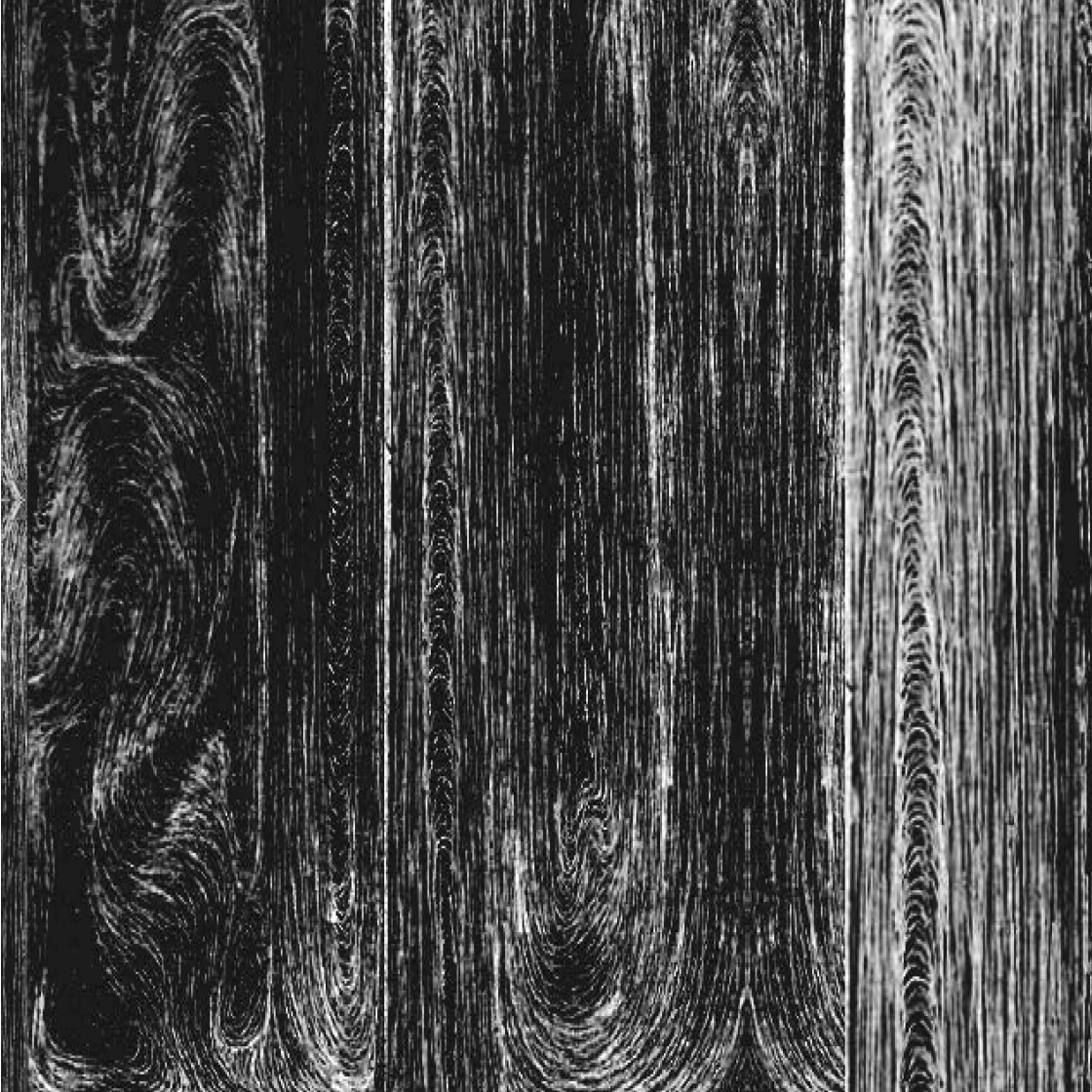
Proteinaceous Prints
The first section, titled Proteinaceous Prints, is rendered in black and white. These works abstractly represent the architecture of storytelling — the introduction, rising action, climax, and resolution — as a kind of visual skeleton. The white lines represent the presence of Anancy’s “spider webs.” The absence of color also allows viewers to focus on structure: rhythm, pacing, form. It asks: What does a story look like before it is spoken? How does narrative evolve when passed down through generations of oral memory?
The second section introduces the central conflict: the battle between the Leaf People and the Sigatoka disease — a real fungal affliction that attacks banana leaves across the Caribbean. Inspired by stories told within my family, I imagined the Leaf People as guardians who live inside the leaf’s veins, fighting back against this ecological threat. These works are rendered in complex layers of printmaking, textile collage, and fragmented figures. The materials themselves rupture and fold like diseased leaves, echoing the tension between growth and decay, survival and erasure.
In reading Marlon James’ Night Women, I was drawn to how narrative itself becomes a survival mechanism — how voice is never singular, but layered, concealed, and inherited. The novel’s structure reveals how storytelling is often a coded act of endurance, where what is said and what is withheld exist in constant tension. Even the act of narration feels haunted by shifting perspectives, and by the sense that the story is always being passed through someone else’s body. In the final turn of the text, it is ultimately Lilieth’s daughter who carries the weight of telling, re-framing the entire narrative as inheritance rather than origin. This repositioning of voice mirrors the way Anancy-ism operates — not as a fixed mythology, but as a transmitted intelligence.
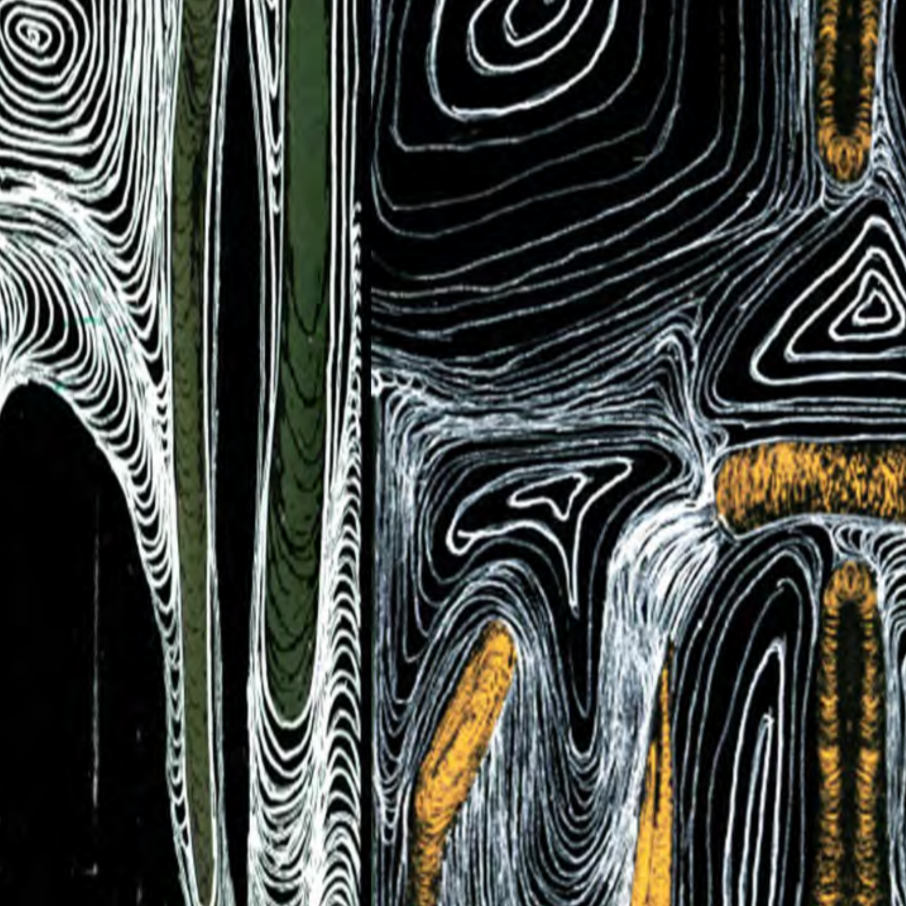
Process Outtakes from Sabine’s Sketch book: Labeled “Leaf in Battle”
Within this same lineage, echoes of Anancy appear not only as reference but as method — a trickster logic embedded in how characters communicate, conceal, and survive through speech. Storytelling becomes both shield and strategy, a way of negotiating violence, desire, and power without direct exposure.
The final chapter shows the aftermath — what happens when the leaf changes. In this section, the visual language shifts. Color returns, but it is transformed: subdued, fractured, and strange. The lines are more abstract. The compositions drift. These images reflect how trauma — both environmental and historical — leaves a mark. They speak to how cultural memory adapts, how visual forms absorb change, and how the archive is never static.
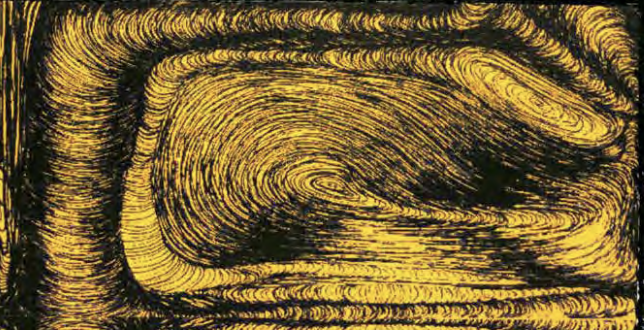
Process Outtakes from Sabine’s Sketch book: Labeled “Sigatoka”
Throughout this process, Anancy becomes not just a subject but a guide. He moves through the work as a shape-shifter — a symbol of adaptation, mischief, and coded intelligence. His presence mirrors the curatorial questions I aim to explore: How do we tell stories that were never officially documented? What does visual resistance look like? And how can institutional spaces make room for imagined, inherited, and ecological knowledge?
This work finds resonance in the work of Jamaican painter Karl Parboosingh, whose bold compositions and expressive figuration reflect the psychological and political tensions of Jamaican life. His ability to merge Jamaican Expressionism with a gothic sensibility mirrors the tonal shifts in my own series. MoMA’s Neo-Carib Visions program, along with its stewardship of artists who resist historical flattening, signals an institutional shift that aligns with my own curatorial vision.
For me, curation is not just about selecting works — it is about protecting stories. Through Anancy-ism, I aim to challenge how we define “archive,” who controls cultural memory, and what it means to be seen. This catalogue of work is not only a visual project but a methodology in motion.